We are a small independent game developer located in Warsaw, Poland. Before The Astronauts, some of us worked on games like Painkiller and Bulletstorm.
Our latest project is Witchfire, a dark fantasy first person shooter set in an alternative world in which witches are real and very dangerous – but so are you, witchhunter.
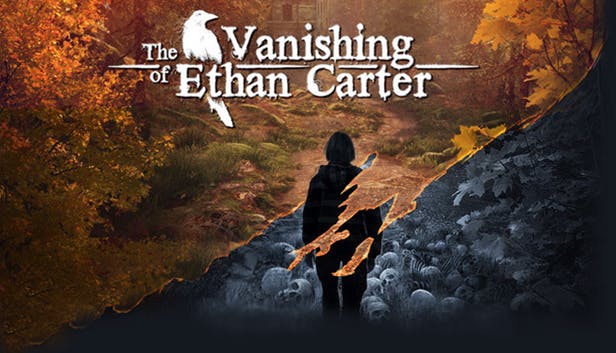
Our first game was a weird fiction mystery titled The Vanishing of Ethan Carter. The game has won many awards, including BAFTA, and we sold over one million copies. It’s available on PC, PS4 and Xbox One. Click here for more details.
Did you know that dark fantasy is basically horror fantasy? And thus Halloween is a good opportunity to announce the writer for Witchfire, Nick Adderley. If we were into official press releases, this one would go like this…
Nick Adderley is a US-based writer with a particular passion for interactive narratives, born from a lifetime of immersion in tabletop RPGs and gaming series such as BioShock, The Elder Scrolls, and Fallout. This combined with a love of antique literature have led to an artistic voice that seeks rich depth with a sheen of modern polish, expressed in prose, script and even verse.
Mr. Adderley has worked remotely on titles such as Fallout: Miami and Ken Levine’s Judas; today, he is honored to announce that he has also been chosen to write with the talented Astronauts for Witchfire.
He currently lives in North Carolina, with his beautiful wife and two daughters.
But we’re not like that, so let’s just say that Nick is bringing both talent and wisdom to Witchfire. We were looking for someone who can add depth to our world and its story but is also unafraid to reach where creators often fear to reach.
You’ll see soon enough.
Meanwhile, here’s a Witchfire short story that Nick wrote — one to give you an idea of the kind of world our hero lives in…
Illustration by Grzegorz Pędziński
The Coven of Abnoba
by Nick Adderley
The Marcynian Forest, the Black Woods of Germania, had been swallowed for years in an unnatural night. Clouds that had never broken even in a peal of lightning bled over it continually, a freezing, reeking, pestilential rain that soaked into the trees and dripped from their branches like needles. The trunks were narrow black spears that pinned a carpet of thick, curling vapour to the forest floor – an ethereal, tranquil cloudscape, on which, in mad contradiction, the impenetrable woodland rested. As Albrecht marched, his eyes downturned and his hair dripping frigid, stinking rain, even his own feet were hidden by the churning smoke.
The troop train entire was bent double – stumbling more than marching, their hands on the back of the man in front, blind with exhaustion. They hacked and coughed, because they were too weary to speak, trying to expel the rancid smoke from their lungs; the man to Albrecht’s left hadn’t stopped wheezing and retching for hours, and now, as he trudged, Albrecht prayed God would give him the strength to kill the man, to shut him up. But the strength didn’t come – he trudged on, and the man kept heaving and coughing.
Others in the train would succumb to it, finally falling into blessed silence and keeling over into the mist: off the path if they were on the edge of the column, in the middle if they weren’t. You couldn’t see them through the smoke, after that – you’d only know you’d reached one when your feet struck them, instead of crackling in the hoarfrosty mud. If they were fresh, they’d moan. If they’d been from far up in the column, they wouldn’t. Albrecht silently begged for the man on his left to give up, to breathe the plague-rain deep; he was on the outside edge of the column. He’d roll into the black undergrowth and wouldn’t be a bother to anybody. But there he was, hacking, heaving…still.
Someone screamed far ahead in the line. Several someones. The column was too tired to stop.
At the end of this train, God only knew how many miles ahead, Folcmar was waiting. Albrecht’s father had been stabbed while thieving plague-corpses, his sister had rotted alive on the other side of her door, whispering to Albrecht not to come in, not to catch it. Ironically, his brother had been saved by the levy: now that Roma Borealis was dead, how much worse could it be, hunting witches with Folcmar? The man to his left coughed and spat.
He’d been warned – “Beware the Coven of Abnoba,” they’d whispered, “Old German magic – it’s not like any of the sieges you’ve seen.” Albrecht didn’t care. Being gored on a pike or consumed by pox, either was better with his brother than alone. The man to his left guttered in his throat.
The column stirred in front of them, splitting around the center of the path like a stream around a rock. A captain was guiding them, motioning, exhausted. “A pit, there’s a pit in the path, go around, go around.”
Albrecht raised his head to look as he approached it. The borders of the pit could only be guessed by the splitting train, but one indicator showed in the center; it rose like the mast of a ship gored on rocks, piercing the fog to show only a few inches: the sharpened point of a beechwood stake, glistening red. He wondered if the ones who’d screamed earlier were the ones who’d fallen in, or the ones who’d watched. Perhaps both…one who’d seen, and realized too late that he was tipping. Albrecht’s imagination was caught morbidly by the idea – the sensation of the mud slipping from under your boots, trying to seize onto your neighbors as the row in front of you vanished, leaving only that red smear.
A call came down the line, echoed wearily from mouth to mouth – Halt the column. They bumped into each other, sagging wearily in place. The pit yawned on Albrecht’s right hand. The man to his left gagged as bile welled up in his mouth, and drooled it out over his invisible boots. The reek washed over Albrecht with the breeze.
It would be easy, he thought. The rows behind and ahead of him would probably be grateful for the silence. The captain would be too tired to discipline him. The man coughed again, tried to clear a raw throat, and Albrecht grabbed his shoulder. Then he paused.
Beyond the path, just where the top of the mist met the brush, there were points of light, like red candle flames. Two of them. Then innumerable points. Piercing the darkness all up and down the woods, in close-set pairs. The undergrowth breathed, a thousand rattling breaths through a thousand rotten lungs, a remembered ritual of the living, aped by the dead.
As they rose, they were fat, bloated to bursting with all the fetid diseases of the hell-fog; the armor of the Church Militant hung in fragments from buckles that cut into their morbid flesh, and spears or bayonets rusted in their engorged hands. They closed on the column like wolf jaws, from both sides at once – Albrecht unslung his rifle and butted the man to his left into their charge. Whatever came next, he’d had his revenge. The man stuck on a pike, weighing it to the ground; and the witchspawn dropped the weapon, falling on Albrecht with flailing arms.
It was heavy – the weight crushed Albrecht into the mist on the ground, as it snapped for his throat. The graveyard stink watered his eyes, but he twisted in the crackling mud, heaving the grotesque thing into the pit in the middle of the path. It yelled like a man.
Albrecht scrambled to his knees, fumbling through the mist as he hacked and spat out black water. At last his fingers closed on his musket and bayonet, and he rose, watching the pit.
The column was in ruins. Some fled the path into the black woods, to be slain by reserves of the Coven’s army. There would be no survivors. A scratching and scrabbling came from the pit, and the smoke over it roiled. Still racked with coughing, Albrecht shouldered the musket.
He pulled the trigger the second he saw the moldering hand emerge; with a quiet click. The powder was wet. The face reared out of the cloud, and Albrecht froze as he saw it with terrible clarity for the first time.
It surged up and caught his arms, hauling him back to the pit. The rifle slipped out of his fingers into the mist, and Albrecht knew his search was at an end, that he wasn’t dying alone. He had found his brother.